
7 Norbert Elias: master of historical sociology
7.1 Life and Career
The sociology of Norbert Elias (1897-1990) deserves a wider audience. A major reason for the relative lack of familiarity with his work was the very slow progress of his career. Being raised in a well-to-do Jewish family in Germany was a bitter privilege in the first half of the last century. When the Nazis seized power Elias found it better to move to Paris. A few years later he sought refuge in England. There he finished his major work The Civilizing Process. Alas, in 1939, there was little interest in a German book about the socio-genesis of civilization. After WWII, seen by many as the greatest failure of western civilization, it still took three more decades before publication in English.
7.1.1 Child, student, soldier, and his shift to sociology
Norbert Elias was born in Breslau, now Wroclaw, on the 22nd of June 1897. He was the only child of Hermann and Sophie Elias. Together they formed a small, but happy Jewish family.
As a child Norbert was often too ill to go to school. Hence he was privately taught. He was an eager pupil, always motivated to expand his knowledge and gather new insights. This quest for scientific truths remained his major occupation if not his major obsession during the rest of his life. Though he claimed that this obsession absorbed so much time and energy that not enough of it was left for a partner, he found enough spare moments to write poems. Even long after retirement, he used to start his working day at 11 o’clock and then went on until 10 o’clock in the evening, adding new books and articles to an already impressive oeuvre. At old age he grew blind but even that did not stop him from producing new texts, although he now needed the help of an assistant to write them down. Thus, he went on writing books and essays until the day he died. The day he died was 1 August 1990.
His father owned a profitable textile business. The family lived in a spacious apartment with ample personnel. His father was a real Prussian. In fact, the entire Jewish community in Breslau considered themselves as good Germans or Prussians. They looked down people who doubted their German identity.[1] In spite of their German mind-set they occasionally suffered from anti-Semitic incidents.
Norbert attended the Johannes gymnasium, an outstanding grammar school with a distinguished staff. There he acquired the foundation of humanistic, classical education. He loved the works of German literary giants, such as Goethe, Schiller and Heine. During World War I and the economic depression that followed he came to realize that their esoteric philosophical orientation was badly connected to the hard realities of life.[2]
Elias always identified himself with the cultural tradition of Germany. He found the Kaiser ridiculous and was strongly opposed to the war. When he finished secondary school, he was compelled to join the army and became a reluctant soldier in the Signal Corps. It was his task to maintain and repair Telegraph lines between the front and headquarters, a task that easily could have killed him. The physical part of army training was good for his health. Moreover, his war experiences taught him that the individual was rather powerless against social forces.[3]
After the war, Elias studied philosophy and medicine in Breslau, but this combination was too much. He quit medicine, but kept fascinated by some of its topics. In particular, the anatomical lessons showed the extremely complex connections between the skeleton, the muscles, the nerves and the organs. These lessons left a long-lasting impression and would be reflected in his sociology. Time and time again, he would emphasize the strong bonds between the biological and social aspect of human existence. His medical-biological knowledge did not always agree with western philosophy. Descartes had been the first to make a clear distinction between the subject, in the form of a grown up individual with an independent ‘internal’ mind, and a reality outside that consciousness. These autonomous subjects were supposed to be able to study the external reality in an objective way. But Elias had learned that there always was a close connection between the internal mind and the external world. When, for example, someone had a funny thought this would immediately manifest itself in the expression on his or her face. Also the relations between people have a biological basis. The social aspects of a smile or the sound of laughter cannot be separated from the physiological aspects. To Elias humans, by nature, are social. The facial muscles of people are much more differentiated then those of primates. Humans are meant to live together with other people. In a long-term evolutionary process. They have acquired complicated forms of communication and the physical adaptations to make speech possible. Facial expressions, such as smiling or crying, are forms of communication too. These expressions and the inner feelings are both aspects of the same reaction to something that is happening around us. When people are growing up they learn to control their feelings by not showing natural reactions. For instance, shop assistants are trained to remain calm and friendly even when a customer is unreasonable. Their friendliness no longer is authentic but acted.
7.1.2 An academic life outside academia.
In Breslau the professor Richard Hönigswald made a huge impression on Elias. He was a brilliant and original neo-Kantian philosopher, who taught him to trust his intellect, that thinking can be productive and innovative.[4] He also admired his indifference to philosophical fashions. Elias ‘inherited’ this academic virtue. Alas, this virtue is seldom rewarded, because it does make one an outsider. Elias interrupted his studies at Breslau to study a semester with Heinrich Rickert and Karl Jaspers in Heidelberg and Freiburg. He started to work on a thesis in which he showed great skepticism about some central Kantian tenets of Hönigswald, his supervisor. In opposition to Kant, Elias was convinced that basic categories of thought – space, time, causality, and fundamental moral principles – stem from social experience. They are not inherent in the human mind. For Elias all ideas are the products of the intellectual development of scores of generations. Hönigswald was not pleased by the attack on some of his cherished ideas. In view of the power relations between a supervisor and a candidate and the unripeness of some of his ideas it is no wonder that Elias had to rewrite important parts before his thesis was accepted. Elias decided to turn his back on philosophy and to shift to sociology.
Unfortunately, as a result of the hyperinflation of the twenties his father could no longer support his studies. Elias had to look for a job. He became an export manager for an iron foundry. This job taught him a lot about the practical side of life. After two years, he started to study sociology in Heidelberg where Alfred Weber had succeeded his brother Max. At the time, the intellectual field was strongly politicized between the bourgeois and liberal-democratic tradition of Max Weber and others and the socialist tradition that followed the teachings of Karl Marx. Elias did not want to take sides, but had to choose a supervisor. He approached Alfred Weber with a plan for his Habilitationsschrift. Weber accepted his plan but did not offer him a job. Elias earned some money as a free-lance journalist but this was not enough. Once more he needed the financial support from his father.
Norbert Elias took a strong interest in the subjects studied by Alfred Weber: the history and sociology of culture. Alfred Weber argued that the development of the economy and science showed clear signs of progress, but this was not the case for culture. Weber found it impossible to discern progressive or regressive developments in art, religion and general culture. Yet, at that time, Elias was already pondering on one of his most beloved theses: cultures do not develop in a haphazard way but in a specific direction, implying some sort of progress.
In Heidelberg the brilliant lecturer Karl Mannheim drew much attention. Soon Karl and Norbert became close friends. Mannheim introduced him to the salon of Marianne Weber, who, together with Alfred Weber, did all she could to keep the memory of Max Weber alive. Mannheim was a renowned specialist in the sociology of knowledge. In his view and to a large degree, all ideas were socially conditioned, and therefore were also restricted, biased or even corrupted. Hence, everyone had to be very skeptical about the validity of his or her ideas. For Mannheim, this was a rather disturbing thought. He looked for a way out. His solution was based on the idea of independent intellectuals, freed from restrictive and corruptive social influences. They should be able to discuss their ideas freely with their equally independent academic friends and colleagues. Thus they could act as frei-schwebende Intelligenz (free floating intelligence). If new ideas stood the test of this intellectual forum, then they could be considered valid.[5]
Also Elias held on to the sacred scientific goal of revealing irrefutable truths. He was convinced that objective social science is possible, but that it still had to face a hard and time-consuming learning process, just what the physical sciences had had to face a few centuries ago. The physical sciences too had to emancipate themselves from all kinds of pre-scientific thought, such as mythical and theological dogma. Hence, Elias remained an optimistic believer in the possibility to invent and develop images of society that were congruent with reality, thus helping to demolish all kinds of ideological myths.[6]
In 1929, Karl Mannheim became professor in Frankfurt; Elias became his first assistant. The Department of Sociology was housed on the ground floor of the famous Institute for Social Research, later known as the Frankfurt School. The institute employed many Marxist social scientists such as Theodor Adorno, Max Horkheimer and Erich Fromm. Elias kept politics at a distance.
In 1933, Hitler seized power. Elias sensed that Germany, and the German Jews in particular, would soon be facing a hard time. He had attended a public speech by Hitler and was greatly disturbed by his message and even more so by the fanatic response of the audience. He noticed Hitler’s charisma and ability to manipulate a large crowd. Therefore, Elias decided to finish his thesis for Habilitation as quickly as possible. But it was to no avail. After the Nazi’s took power Jews had to abandon all hopes of an academic career, or any career for that matter.
In 1933, he went to Paris, but his life in Paris was very difficult. [7] He did not get a job at a university and failed to make some money doing business. After two years, he decided to go to England, though he could not speak English. In London he received some financial help from a charity and he spent most of his days in the library of the British Museum. For three years he worked hard on The Civilizing Process. In those days it was very difficult to find a German publisher for a book written by a German author of Jewish descent. In 1939, his father found a publisher in Switzerland. Alas, not many copies were sold.
7.1.3 Late vintage
It did take a very, very long time, before the great value of Elias’ work became widely recognized. Apart from the political situation in Germany and the unfortunate moment of the publication of his masterpiece, there still are other reasons for his late recognition. His approach did not fit in one of the widely accepted traditions of sociology. The Civilizing Process is not a purely sociological book. It also contains historical and psychological perspectives. Moreover, it did not offer schemes, definitions or statistical analyses and lacked explicitly formulated hypotheses. And last but not least, it did not contain critical discussions of the work of other theorists.[8]
After a while, Elias received a scholarship as Senior Research Fellow at the London School of Economics. But even in England the war blocked his career when all Germans in Great Britain were interned in camps. The compulsory residence in these camps was disagreeable to say the least. People felt that great injustice was done to them. Alas, the war had even worse experiences in store for him. In 1938, Elias had met his parents for the last time. He failed to persuade them to come to England. As assimilated Jews they believed that they had nothing to fear in Germany. His father said: “What can they do to me? I have never done wrong to anyone – I’ve never broken a law in my life.” This turned out to be a terrible misjudgment of the Nazi’s. His father died a natural death in 1940, but his beloved mother was murdered in Auschwitz in 1941. Thinking about her horrific death would always be very traumatic for Norbert Elias.[9]
After the war Elias survived doing freelance jobs, such as teaching evening classes at schools for adult-education. In those days he met important psychoanalysts and subjected himself to psychoanalysis.
In 1954, at the age of 57, Elias received his first full-time academic position at the University of Leicester. Despite his advanced age, he had to start as a junior lecturer. He soon became a highly regarded and influential teacher. Yet, his reputation in the Department of Sociology was controversial too. He did command respect for his intelligence and erudition, but was also considered a bit odd and old-fashioned; a typical pre-war continental scholar, learned and talkative, but not quite abreast of all the latest developments.[10] He retired in 1962, at the age of 65. From 1962 to 1964 Elias taught as professor of sociology at the University of Ghana. During this short academic interlude in Ghana, Elias began to collect African art. What attracted him in African art was a strong and direct appeal to emotions.
The 1950s and the 1960s were an unfavorable time for the type of historical sociology favored by Elias. Before the war sociologists thought it quite natural to study historical developments in order to get a better understanding of the present. But after World War II the spirit of the times had changed. Social scientists ‘retreated’ in the present. Almost all attention was directed at the understanding and solution of social problems in capitalist societies. Most sociologists were analyzing large amounts of statistical data. Others occupied themselves with the abstract schemes of Parsons, or were involved in critical theory as advocated by the members of the Frankfurt School. So, in postwar and prudish Leicester, German homosexual Norbert Elias remained an academic outsider and solitary figure. His work was not translated into English yet; a major handicap because only very few English colleagues could read German. Part of this retarded translation was that twice Elias was not satisfied with the translation of The Civilizing Process. Another problem was that he wanted to rewrite the whole book and add new material about masturbation. Finally, in 1969, The Civilizing Process was published in English. The next year, also What is Sociology? was published in English.
Elias owed much of his breakthrough to Dutch sociologist Johan Goudsblom. From 1969 to 1971 Elias was a visiting lecturer in Amsterdam and the Institute of Social Studies in The Hague. Several young Dutch social scientists fell under the spell of his forceful personality. They extended Elias’ approach to a huge variety of topics. By the mid-1970s, Elias also was invited to give guest lectures at several German universities.
Elias was the victim of night-marish event. He had written a book-length typescript on The balance of power between the sexes. He had piled-up all the drafts on the floor in his room in Leicester. When he was in Germany, the cleaning lady took the opportunity to tidy his room and got rid of the whole pile.[11] Hence, we do not know much about his stance on the emancipation of women. In his foreword of a Dutch study on women who had left violent husbands, he made some remarks on the problematic situation of women. In his view, these problems could not be separated from problems of the welfare state. The problems of women are different from those of men, but they are interconnected. Both genders are involved in a long-term power struggle. Imbalanced power relations are an integral aspect of all social settings or figurations. We can never get rid of them. Hence, the only solution is to find a way to control these imbalances. We have to create a consensus about some forms of inequality that make marriages work. Should and could there be something like harmonious inequality? Could there be a social figuration in which men and women both have to accept some imbalances that sometimes favor women and sometimes men?[12]
In 1978, Dr. Norbert Elias went back to Germany. He took residence at the Center for Interdisciplinary Research in Bielefeld. There, he enjoyed the intellectual climate, the surrounding woods and the swimming pool. Germany also made amends for the past by granting him the title and the pension of Professor Emeritus of the University of Frankfurt. On the first of August 1990, in Amsterdam, working on the introduction for The Symbol Theory, Norbert Elias dozed off and died peacefully.
7.2 On sociological theory
In What is sociology? Elias presented a new sociological approach. He strongly opposed a theoretical model of society that prevailed in sociology. This popular model resembles a series of circles within circles. People locate themselves in the center circle as an ‘I’ or ‘Ego.’ All the rings around this inner circle resemble sections of society. Closest to ego is the family, followed by the school or the organization they work for, further rings represent the system of education or the labour market, and the most outer ring represents the state, with its political and administrative system. [13]
The main flaw of this egocentric model is that people see themselves separated from their social environment. It fails to depict the most essential feature of social life: the enormous interdependency of all people. Individuals form multiple ties in dense social networks or figurations. For instance, before our food arrives on our table most of it has traveled a long distance and undergone all kinds of production and distribution processes, carried out by anonymous workers far away. Thanks to our globalized economy, we can eat Gouda cheese or French Camembert, and oranges from California, Morocco, Spain or South Africa. This is the objective, structural, and horizontal side of figurations. However, there also is a subjective, cultural, and vertical side, forming a supportive superstructure. After all, this economic network cannot function without national and international programs that teach people to communicate, co-operate and reckon with each other. It can only function if enough people have been educated and trained to do all the jobs involved in the production, trade and shipping of these articles. We need an elaborate system of international law, norms and values to support this complex system. Most of these activities are being regulated and supported by legal rules and government institutions, to safeguard the quality of products, the financial security of businessmen, and the safety of transporters. In our modern world it is easy to see that a prolific division of labor and social functions requires a high level of international interdependency.
Elias rejected the model in which the individual is viewed as an autonomous unit, as a singular ego, in the center of various objective social frames. This objectification of social structures is understandable, at least to some degree. People feel the presence of social influences. They experience social constraints as forces from outside. So what seems more natural than to ascribe these impositions to concrete things? For Elias the major task of sociological theory is to enlarge the insight in all forms of social constraints. Sociologists should fight the tendency to see social structures and processes as objective, autonomous things that could exist without and outside individuals. Such a view would reinforce processes of reification (Verdinglichung). It would dehumanize social structures and processes. But one should never forget that social processes could not exist without the actions of real people.
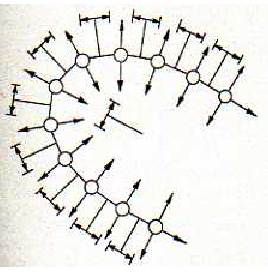
Figure 7.1 Figuration model of Norbert Elias as presented in What is Sociology
In Elias’s sketch of a social network or figuration of individuals the little circles represent individuals that stretch out in many ways to make social connections with other individuals. These social relations with other individuals are characterized by a more or less stable balance of power. Examples of such figurations are a group of friends, a family, a town, a school, a social class, and a nation. Individuals within a social figuration will see themselves as a member of such a figuration and will speak of my friends, my family, my school or my country. From this perspective it is clear that individuals are important parts of social groups or the larger society and do not stand outside these groups, families, circles of friends, and more formal social organizations.
Already more than one and a half century ago, Saint-Simon and Comte were the first who saw that social phenomena function at a higher level of co-ordination and integration than the physiology of biological organs. Hence, the social cannot be deduced from the physical or biological. It is a phenomenon sui generis. Elias supported this view wholeheartedly. He saw it as his most important task to search for sociological concepts, theories and models that refer to dynamic social networks of chains of interdependence. However, he expected that it would take many generations to come before people would be familiar with this new scientific approach.[14]
7.2.1 Figurations or processes?
To make an end to the idea that individual and society are two separate entities Norbert Elias introduced the concept of social figurations. In his theoretical framework each individual is the junction of a great variety of social relations with other individuals. The course of social actions sprouts from mutual dependencies of all the members of these networks. However, the outcomes of interactions cannot be deduced from the characteristics of the individual actors. Time and time again Elias tells us that these social figurations influence the course of events autonomously.[15] For instance, the course of a game of cards is unpredictable, especially when the players are of equal strength. It is contingent on how the cards are distributed andon unpredictable errors of a player. This can change the mood of the players and influence the way they play. It is equally possible that the game gets so exciting that the players temporarily forget everything around them, raise their stakes in irresponsible ways, and go on for hours, though they had not intended to play that long or to take such high risks. The card play becomes a dynamic social event. It gathers momentum on its own and in a way that cannot be explained by the intentions or behavior of the individual players. All this is even truer for team sports. The two teams and the referee constitute a complex figuration that can change at every moment. A nasty foul can arouse many unpredictable reactions. The same is true for a blundering goalkeeper or an inconsistent referee. Events like this can change the whole atmosphere and turn a defensive team into an aggressive one or vice versa. It can lead to many irritations that will manifest themselves instantly or later in the game. Also a beautiful cross ball or a lucky goal can make a big difference. At such moments even a badly performing team can get wings and start to produce whole series of successful actions, get into a winning mood and make it happen for them. Examples like these clarify that besides the complexity of the game, the mutual dependencies of the team players, autonomous and unpredictable factors play an important role in the course of the game.
Elias also introduced the notion of ‘double-bind figuration’. They emerge and spontaneously develop in situations in which two competitors strive for the same prize. Like many people, Elias saw the risk of a nuclear war arising not because any group of people seriously wants to start such a war, but because the bi-polar struggle between the superpowers of the Cold War had assumed the form of a double-bind figuration. The compelling force of such an unplanned social process cannot be understood simply in terms of the perceptions, plans and intentions of one side. The perceptions, plans and intentions of each side are shaped and reshaped in response to the perceptions, plans and intentions of the other. They are locked together like boxers in a ‘frozen clinch’, neither able to escape for fear of exposing himself to the blows of the other.
A double-bind situation tends to be self-escalating for several reasons. In the nuclear arms race each side accumulated more arms in response to the other’s growing striking power. Each side invested ever larger sums of money and employed ever more engineers and scientists to invent more deadly bombs. The reciprocal danger enhanced emotive fantasy and unrealistic ideology on both sides. However, Stephen Mennel draws our attention to the hypothesis of Godfried van Benthem van den Bergh, a specialist in international relations, who employed Elias’ theory in a more optimistic way. He argues that nuclear weapons had unintended benefits: they forced the great powers to conduct themselves in a much more prudent and restrained manner than in pre-nuclear times, because they were well aware that a nuclear war would produce no winners. There would only be countless losers on either side plus the rest of the world.[16]
Elias favored the figuration concept to describe the process of rendering form. He wanted to draw attention to two elements that are inherent to social phenomena. There always is a structure, which has the character of a network. At the same time, there is a dynamic process going on, which gives rise to all kinds of developments. This concept has to counterbalance frequently used and rather static terms like ‘structure’ and ‘system’, to which Parsons paid so much attention, which annoyed Elias much more than it should have.[17] A serious drawback of concepts like structure and social system is that they seem to refer to objective things that exist outside and completely separated from individuals and their acts. In contrast, figurations have to be viewed as: “networks of interdependent people, with shifting, asymmetric power balances.”[18]
Dimensions and aspects of social figurations
The social figuration is a rich concept that can be used to diagnose, explain and predict – in a probabilistic way – changes in culture and mentality.
- It has a physical dimension: networks cover short and large distances;
- It has a social dimension, encompassing many types of social relations, roles, functions, constraints and possibilities, and varying balances of power;
- It has a mental dimension because everyone perceives these social relations and takes them into consideration.
- It has a dynamic historical dimension. The roots of figurations lay in the past, and they will develop further in the future.
Later, after many followers had adopted his ideas, his brand of sociology got labeled as figurative sociology. Elias did not like this at all, because it could give the impression that his ideas had engendered a new school of thought: the figurative school. This he abhorred, because schools of thought tend to become dogmatic and counterproductive for the development of new ideas. That is why he preferred to speak about process-sociology; firstly, because this fitted his intentions far better; secondly, because process is a very common word that could hardly be misused as a label for a new paradigm. On the other hand, Elias did not want to get rid of the concept of social figuration, because it pointed to basic tenets of his theoretic perspective. Sociology is about a plurality of people who are bonded to each other in many ways (interdependency). Their life evolves around the dynamic social network structure they constitute and reproduce together.
Continuously social relations are changing. Most changes are of minor importance and hardly noticeable, but some modifications are highly significant and change major features of society. The inherent dynamics of social figurations is largely autonomous. It is hard to grasp, neither by its participants, nor by the sociologist who are observing them.[19] The interweaving of individual actors produces all kinds of patterns and processes; in short, it leads to what sociologists call ‘emergent properties’. These principles are so evident, that all sociologists should back them. Yet, they are often forgotten.
Process-reduction
An important element of Elias’ critique at traditional sociological concepts is his notion of process-reduction. He protested against the widespread inclination to reduce social processes to steady states. An example from our perception of nature is ‘the storm is howling around the house’, as if the storm is an entity that can blow. In reality the “blowing” is the storm. It is the movement of a strong stream of air from a high-pressure area to a low-pressure area. The movement of air and the sound that is produced during this process are two aspects of the same phenomenon.[20]
Elias was convinced that European languages are insufficiently equipped to describe complex and dynamic social processes. They have far too many words that emphasize static, material objects, but in reality all social objects are dynamic. Therefore he thinks that there is a great need to coin new process-words for adequate descriptions of social reality. But this is only the beginning. We need to invent words that can describe the complexity, the simultaneous interconnection and character of social processes.
We should also keep in mind that social phenomena can change. Therefore, also the meaning of the concepts that describe certain phenomena will shift. Take for instance ‘bourgeois’. The content of this concept has changed as soon as the social context for the bourgeoisie has changed. Hence, the meaning of bourgeoisie in the Middle Ages is quite different from today’s meaning. Nonetheless, both concepts still are connected to each other through a long chain of connecting shifts in meaning. If these historical modifications are taken into consideration, we can still use these concepts.
Evidently, sociology cannot manage without rather vaguely defined concepts such as ‘organization’, ‘institution’, and ‘community’. For the time being, we have and can proceed with the help of these concepts, although we always have to keep in mind that social reality is complex and dynamic, and that it refers to figurations of interdependent human beings.[21]
7.3 The Civilizing Process
We like to see ourselves as ‘civilized.’ To be civilized is to be polite, good mannered and considerate towards others. In the thirties of the 19th century, Elias noticed that the concept of civilization expressed the self-consciousness of the West. It summed up everything in which the Western World believed itself superior to earlier societies in Europe or to ‘more primitive’ ones outside the Western World. With this term it sought to describe what constituted its special character and what it was proud of: the level of its science and technology, the quality of its performance, the development of its culture and worldview.[22]
7.3.1 French civilization and German culture
Clearly, this concept is loaded with evaluative meanings. But Elias did not intend to write a study that would increase the self-satisfaction of westerners. He had noticed that most Europeans tended to consider their medieval ancestors as ‘uncivilized.’ However, medieval people did not consider their behavior to be coarse and inconsiderate. Hence, they saw no reason to change their conduct. Yet, since then, feelings of shame and embarrassment have increased, and many norms about behavior have changed. That is why Elias called this a civilizing process, however, without adding a normative judgement whether this was a good or bad process.
“How did this change, this “civilizing” of the West, actually happen? Of what did it consist? And what were its “causes” or “motive forces”?[23]
Elias started his book with an analysis of the sociogenetic process that led to our current conception of terms like civilization and culture. In France the word civilisation was used in the connotation of being civilized, of inherently being more civilized than people in the French colonies and, for the aristocracy and the bourgeoisie, of being more civilized than the lower classes. In the 16th century, courtiers used the word civilité to describe their own ‘courtly’ modes of behavior. Thus they also distinguished themselves from the more rough conduct of their forbears. Later on, the French intellectuals took on many of the ways and attitudes of the elite at the royal court. Trickled down via the intelligentsia and other ‘upstarts’ the term civilisation came to be associated with the progress and identity of the nation as a whole. This happened partly because the French court was relatively open. For the leaders of the French bourgeoisie, which had become a politically active class, the process of civilization was still in progress. For them, civilization ought to include more than refined manners and the pacification of the country by the king. Government should be efficient and democratic. Education should be expanded and improved and justice should be less barbaric. And, last but not least, citizens should be better educated, freer and more humane.
In Germany things were different. There, Zivilisation had taken on quite another shade of meaning. In Germany there was no single state or political center. Instead, there were numerous small courts, all of them French speaking and relatively exclusive. There, it was very hard for outsiders to get accepted. Princes and courtiers regarded the German language as vulgar. The thinly scattered German-speaking intellectuals of bourgeois origin associated the word Zivilisation with polished but superficial manners. In their view, it only scratched the surface of human experience. For them, Kultur was much more important. For them Kultur came to be associated with depth of feeling, sincerity, virtue, intellectual and personal development (Bildung), in short, with all that was real and genuine. The word Kultur was used by the intelligentsia to distinguish themselves and their achievements from the established courtly circles ‘above’ them and from the mass of commoners ‘below’ them. The German intelligentsia had no political power. The social gap between intelligentsia and aristocracy always remained very wide. Yet, the intelligentsia had a great influence on the mentality of the people. They helped to make the national character more bourgeois.
Elias concluded that the process of civilization reached a kind of provisional end-phase near the turn of the 18th and 19th century. At that time nations like France and Germany had become convinced that their civilization and high culture, their scientific, technological and artistic achievements had reached a level of great superiority. And, this idea of superiority seemed to legitimize their dominant position and to bring their way of life to other countries.
7.3.2 State formation, civilization and increased self-constraint
In the next part of his book Elias makes a study of how this process of civilization took place. He took proof from a great many sources: including literature, paintings and drawings, and other historical documents, but mostly from style books. From the 13th to the 19th century these books had set out the standards of acceptable behavior for well-bred people. He used many examples from books meant for the education of the children of the elite stating rules that are now taken for granted by everybody. For instance, he quoted from Der Deutsche Cato: “Do not spit across the table in the manner of hunters.” And from the medieval bestseller De civilitate morum puerilium (1530), by Erasmus he quoted:
“Turn away when spitting, lest your saliva fall on someone. If anything purulent falls on the ground, it should be trodden upon, lest it nauseate someone.”
If we keep with this example of spitting, we can notice that manners got even more ‘refined’ in the next century. From Courtin, Nouveau traité de civilité (1672):
“Formerly, for example, it was permitted to spit on the ground before people of rank, and was sufficient to put one’s foot on the sputum. Today that is an indecency.”
And another century later we can read in a book about Christian civility (La Salle, 1729, 1774):
“When you are with well-born people, and when you are in places that are kept clean, it is polite to spit into your handkerchief while turning slightly aside. … After spitting in your handkerchief, you should fold it at once, without looking at it, and put it into your pocket.”[24]
Nowadays, all western children have to learn to behave in a ‘civilized’ way. Already at a very young age they are being trained to eat decently, not to speak with a full mouth and to chew with their mouth closed. They learn to refrain from belching, spitting, farting, urinating or defecating in public. In our day and age, all this is so much taken for granted that to read about all these specific instructions is quite hilarious. According to Elias, it is a kind of sociogenetic law that each child has to pass through the same processes that his society had to undergo during its long course of history.[25]
Why can’t we simply explain eating without proper plates, forks and knives by the sheer poverty of the Middle Ages, by the fact that common people simply had not enough money to buy these utensils? Why can’t we explain public urinating and defecating in the open air, from a lack of proper lavatories and water closets? According to Elias, it is the other way around. We do not need a materialistic explanation, but a cultural one. The emergence of feelings of shame and embarrassment about our natural functions led to a growing demand for sanitary equipment.[26] Technically, it was no problem to produce enough spoons, forks, and knives at low cost. However, the available techniques and resources were used (or abused) to demonstrate the richness and wealth of the secular and religious elite. They had silver spoons, crystal glasses, knives with ivory or ebony handles, porcelain cups, et cetera. Yet none of this led to a change in the common way of eating with hands from an ordinary dish, sharing a platter and so on. Centuries ago, to eat in this fashion was taken for granted and suited the people.[27] But, after certain table manners had been developed at the courts these manners implied that people who did not belong to these circles, were coarse and uncivilized. After the middle and lower classes developed feelings of inferiority, they started to change their ways and began to imitate the higher estates. From then on, parents started to train their children to behave decently and show ‘good manners’. Finally, these new manners and attitudes spread over the entire nation.
But this leads to the next question. Why did the well-born people at the courts change their behavior? To answer this, we have to grasp the social figuration of the noblemen in the middle Ages. Then, within the borders of their property, knights could do what they liked. They were hardly constrained by governmental rules, tax collectors and scores of other laws and social obligations. There was no need to be considerate or show empathy with all kinds of people, nor was there a continuous demand for good manners.
Knights were lord and master of their manor. Yet, they were not entirely free. They were part of a social figuration, bound in a network with their servants, serfs, farmers, and craftsmen and connected with other knights and their helpers, soldiers and bondmen. They were expected to defend their territory against all competitors and to expand it as soon as the opportunity arose. Their whole existence was based on this perpetual competition for the defense or the expansion of their domain. They had to defend their farmers, bondsmen, wives and children against murder, rape and robbery.
Protection and suppression are closely related social functions; this certainly was the case in the heydays of knights and castles. In fact, the social pressure was so huge, that knights really had no choice. Knights that could not fight well lost their worldly possessions, their status and prestige. Often they also lost their lives. They simply had no alternative but to fight and to fight well. The social pressure executed by the figuration stemmed from the will of every knight to acquire more land. And the will to gain more land stemmed from the figuration constituted by the knights.[28] This sounds like a circular argument, but it is not. It is based on the interplay between the individual and the collective. Besides, we should keep in mind that different generations are involved here. The will to expand their property is being instilled into each new generation during their youth. They are being socialized to become brave and chivalrous knights with a strong will to defend their land and honor. We can safely assume that knights were not born as aggressive fighters, but were socialized to become vigorous attackers as soon as the need for it emerged. In this way, that specific social figuration is reproduced in each new generation of knights.
Somewhere in history this led to significant concentration of power and the formation of states. It was never planned. It simply was the outcome of a process in which knights did not want all the land; they just wanted the land next to their own. This simple and precise formulation expresses well how, from the interweaving of countless individual interests and intentions, something comes into being that was not planned by anyone, yet has emerged from their actions. This is the whole secret of social figurations, their compelling dynamics, regularities, process character and autonomous development.[29]
This process land grabbing led to a centralization of power. The strongest knight became king and ruled over all the land he had won. The ‘common’ knights had to submit themselves to central rulers. Most of the defeated knights lost their sovereignty and had to adjust themselves to the straightjacket of a life at the royal court. There they had to learn to behave in quite different ways than what they were used to, much more diplomatic and with all the required courteous manners. No longer were they supposed to fight with lethal weapons on the battlefield, but with subtle non-violent measures, such as persuasion, wit, cunning, and intrigue.
7.3.3 Growing interdependency and psychologization
To Norbert Elias it was plain that significant changes in social conditions are closely connected to salient changes in the way people have to live with each other. Social transformations affect the patterns of behavior, the feelings and the consciousness individuals. Elias renounced any attempt to explain major social changes with the help of only one factor. New techniques of farming, craft, transport and warfare, and last but not least, demographic growth and the emergence of cities also had a great impact.[30] The more differentiated social functions become, the mor close-knitted the social network of interdependencies, and the stronger the need for more self-restraint. Each one has to take into consideration the feelings, intentions and desires of a greater number of people. Even the high and mighty must show self-restraint. This is so, because one’s conduct has repercussions for the conduct and daily life of a great many of people. If people behave in uncivilized and unpredictable ways, they will endanger many links in the social figuration of which they form a crucial part.
Elias explained how sociogenesis gets connected with psychogenesis. Civilization entails psychologization, rationalization, and growing feelings of embarrassment. The ongoing proliferation of social functions means that people have to reckon with a growing number of other human beings. This requires thinking ahead and making good guesses how people will react. By trying to think how other people think, humans will develop a better idea of the other. Thus, the other becomes more specific and unique.[31] In medieval times the world was much more dangerous, people had to make quick decisions about the motives of other people, in particular in the case of strangers: is he good or evil, dangerous or trustworthy? A wrong decision could mean an untimely death. In the past people lived a more simple life. They did not depend on strangers for food, clothing or shelter. They had no need to appease strangers, to acknowledge their feelings and interests. But as soon as interdependency passes a certain level, social life needs more constraint and predictability. Then, individuals have to show more self-restraint. This is manifested in the book of manners written by Erasmus of Rotterdam. It does present much more psychological insights than similar books from earlier periods. For Elias, this was the first sure sign of the ‘courtification’ of the higher classes. Court life was full of intrigues and conspiracies. Everyone had to consider his own deeper motives and strategies as well as those of his peers. In earlier times most people ignored or were not aware of the inner motives of other people. Primarily, they were committed to their personal safety, position and status.
Historians have detected an increase of feelings of shame and embarrassment since the 16th century. Elias defined shame as the fear for social degradation, the fear that significant others would disapprove of your behavior, or even worse, would stop seeing you. People feel ashamed whenever their perceive that their behavior falls below the general norm. Feelings of shame appear when one cannot control one’s feelings. Feelings of embarrassment are very similar. However, embarrassment is engendered by the acts of another person. Embarrassment is the feeling of discomfort that arises when somebody else threatens to breach a rule that you yourself have internalized. The embarrassment will be stronger when this other person is one of your friends or your family. Shame and embarrassment are being fed by the awareness of social risks. Bad behavior of one of your colleagues, friends or siblings might blemish your reputation. That is why embarrassment and shame represent the dark side of rationalization. The ego- and superego of our personality have a double function.[32] They regulate mutual relations and, at the same time, they are involved in attempts to control ourselves. Hence, the increased need of previewing potential events and consideration with the other gave rise to the ‘foreign politics’ of rationalization and the ‘home politics’ of an extension of feelings of shame.[33]
The process of rationalization started to gather momentum in the 16th century. This trend forms the leading thread running through the oeuvre of Max Weber. Elias has put this social trend in a broader perspective. He drew our attention to its repercussions for a change in the structure of our personality. People have always been capable of rational thinking, of planning ahead and empathic acts. However, what is of great interest for us is why these rational acts have become much more dominant in that age; why instinctive impulses and the expression of feelings are being restrained much more than before? At the time, ever more people were willing to postpone short-term gratification for the achievement of long-term greatly valued objectives. At royal courts people strove for higher status, even if that would ruin them. Within their social and cultural context aiming for higher status by buying extravagant attire or giving costly parties seemed more rational than looking after financial affairs. The rationality of the nobility differed hugely from the rationality developed by the bourgeoisie. Since every society, estate, class or group has its own conception of reality, of the most valued goals in life, they also have their own rationality. There always is a calculus of profit and loss, of social status or financial wealth.
7.3.4 Summary of the civilizing process
Elias warned us that we should not be content with the conclusion that the interweaving of human actions gives rise to an autonomous dynamic. Though it is a correct observation, it does not dig deep and leaves everything open to all kinds of interpretations. Without the content of concrete historical examples that show how these figurations emerge and influence social actions it simply is an insight without substance. It is significant to notice how changes in the social structure are coherent with changes in behavior. It also is important to see that socio- and psychogenesis go together. This thesis is founded on the assumption that the human mind is extremely flexible. In principle, each generation can be socialized in new patterns of behavior. Hence, each historical epoch can produce its specific type of people or patterns of behavior.
We need a sociological explanation to account for the marked change in behavior towards more self-constraint. In the second half of the Middle Ages, political and demographic processes gave rise to the concentration of power. In many regions stronger knights conquered the weaker ones. Their territories were added to the territory of the conqueror, which in turn led to the emergence of large kingdoms. After losing their primary function, many noblemen went to the royal courts to become part of the administration or the coterie of the King. There, they had to participate in various ceremonies and adjust to the strict rules of many protocols. Within the small world of these courts salient hierarchies emerged, reflecting the distance to the Prince or the King. Many were competing for a small number of lucrative and honorable positions, continuously scheming to acquire a higher status. In this setting self-control became an important asset. Within this small but overcrowded community noblemen had to be much more considerate with the interests and feelings of one’s fellows than they had been with their former servants, serfs or enemies. Lack of self-control could reveal one’s real motives, one’s hypocrisy and insincerity. Besides, it would mean the loss of the esteem of many peers and superiors. .
There were only a few options to relieve the tensions at royal courts. Some adventurous knights became explorers or colonizers. Another way out was the creation of new specialized functions. Specialization could decrease the pressure of fierce competition. Then one only had to compete with people with the same skills. When the new specializations fulfilled important social needs, other people became dependent on them, creating a significant lengthening of the chain of mutual dependencies. This process of specialization could indeed be observed at the courts. Survivors had to obey to a Darwinist law of social evolution.
The most central element in the civilizing process is the increase of self-constraint. On the basis of historical books on different manners, Elias showed that the aggravation of self-constraint was a structured process and not an accidental sequence of occurrences. Though it did not answer the characteristics of a rational plan, Elias asserted that this process followed a specific path. The trend leads to a further concealment of our animalistic functions, the functions that are connected with excretion of bodily odors, sweat, phlegm, mucus, urine, and feces. This trend has increased our feelings of shame for many of our bodily functions. Emotional sentiments and rational acts of individuals interlock continuously. Increasing interdependency is reinforcing this process. This trend is set spontaneously. Human beings are unable to foresee everything. They cannot even grasp all what is happening today or what has happened in the past. Nevertheless, they must take all kinds of decisions daily. Hence, unexpected reactions and side effects are very common. Even the best intentions can work out rather negatively. The complexity of society and the large restrictions of our knowledge have convinced Elias that long-term-developments cannot be foreseen and planned. The intended actions of individuals are never the starting point for a sociological explanation. The roots of every social development are hidden within the complex social figuration that preceded this development. Even the intentions of individual people are rooted in a specific social figuration with a long history.[34] Or, according to Goudsblom: “the unintended consequences of yesterday are the unintended social conditions for our intentions of today.”[35] And sooner or later the latter will generate new unintended consequences.
7.4 The end of the civilizing process?
Since Elias put forward his theory, we have experienced more permissiveness and ‘informalization.’ Behavior that was once unthinkable is now widely accepted. But does this trend refute his theory of civilization? For example, in many western European countries the casualness in the way children address older people has grown. Nowadays it is very common to address parents with their Christian name. Also many teachers in primary and secondary schools insist on being talked to by their Christian names. Furthermore, in many European countries the use of the informal you has become much more widespread (‘tutoyer’ or ‘duzen.’). Social restraints regarding sexual behavior have shrunk. Today sexual matters are openly discussed. And the dictum to abstain from sexual intercourse before marriage has long since lost its validity. Many modern movies show an overkill of violence and explicit sex. Numerous porn films are produced and viewed. Would Elias still maintain that these are forms of behavior that show an increase of self-constraint?
Whatever might have been feared, the vigorous attacks on conservative and suffocating rules, customs and traditions did not result in an ‘anything goes society’. Of course, significant changes have taken place. An analysis of the moral message of a famous Dutch women’s magazine showed that it significantly altered its tone and content between 1950 and 1975. No longer were women advised to stay loyal to their husbands and to salvage their marriage at all costs. In the seventies, this magazine asserted that teenagers did not always have to obey their parents. Parents were advised to reconsider their views and take account of shifting norms and values. The new message was that individual rights such as the right for self-actualization could outweigh the collective interest of the family. New norms emerged about personal freedom and collective duties. A model of negotiation replaced the old authoritarian relations between husband and wife, between parents and children. These negotiations lead to new rules about fair treatment and a somewhat fairer division of tasks. Emotional arguments became more important. People were advised to make choices that made them feel good. Systematic content analysis of the magazine over a 25-year period shows a shift from moralization towards psychologization.[36] An observation like this nicely fits Elias’ theory of the trend towards more psychologization.
All the above-mentioned examples designate a significant relaxation of etiquette, moral standards, and self-control.[37] But do they also indicate an element of de-civilization? It must be said that modern history already had shown periods of moral relaxation before, for instance the fin de siècle period at the end of the 19th century and the Roaring Twenties of the 20th century. Already in 1939 Elias had observed similar trends, though, at the time, he did not develop them into a theory that would fit his general thesis of the civilizing process. He wrote that traditional modes of conduct had become problematic for the young. When fathers stop thinking, sons start asking questions: Why is this allowed and something else that is quite similar, forbidden? In the sixties and seventies, sexual restraints became even weaker and some have disappeared completely. But according to Elias these are rather mild counter movements.[38] Moreover, the more skin is shown by girls or women in public, the more men have to restrain themselves not to show any sexual excitement. Later Elias described the morally relaxed lifestyle of modern times as a manifestation of ‘controlled lack of control’. In his view it showed a higher level of civilization if men could restrain themselves in settings in which women are wearing miniskirts and topless bikinis without the fear of risking sexual harassment.
= = = = =
7.4.1 A return of barbarism?
For many, the first and most obvious critique at The Civilizing Process was that some main events of the 20th century are clear manifestations of a return to ‘barbarism’. The atrocities of the First and the Second World War, in particular the systematic killing of millions of Jews, plus thousands of homosexuals, Jehovah witnesses, and Roma and Sinti by the Nazi’s, and the far greater number of victims of the terror of Stalin and other Communist dictators as well as the many terrible violations of human rights executed by the fascist regimes of Franco, Salazar and the Greek Colonels seem to deny all notions of cultural or moral progress in Europe.
Since control of violence is a central theme in the theory of civilization, the widespread perception that in many western countries, countries that live in peace for more than half a century, there is more violent than ever before seems to undermine that theory. It is generally believed that nowadays there is more violence on the streets, more aggression from stressed drivers, stabbing of youngsters, gang violence, and also more aggression towards policemen, civil servants, and even against firemen and ambulance men and women. However, once more studies have shown that perceptions can be deceptive. Among historians, it is common knowledge that each new generation of aging adults complain of the increase in violence. If we take the long-term view, former centuries have been much more violent, not only for travelers, but also for the residents of villages and towns. It is not a coincidence that medieval towns and castles had high walls and would close their gates at nightfall. On the other hand, if we only analyze the available data from the last three or four decades, then we might observe some definite increase in violence. The use of illegal substances has yielded a significant rise in drug-related crime. It is also clear that hooliganism around big football matches has become much more widespread than four or five decades ago. In those days people went to the stadium in their best Sunday clothes. Now we can witness many half-drunken and half or casually dressed supporters ready to start a fight with any steward or policeman, or any supporter of the other team. Hence, some researchers have concluded that countries like England are experiencing an actual ‘decivilizing’ upsurge in violence. It certainly is not easy to say whether this represents a minor short-term fluctuation or a more definite reversal of a long-term trend.[39]
As yet we do not fully understand the ups and downs of civilization, or the conditions under which society moves in a certain direction or reverses its trend. Historically speaking genocides, mass murder of defeated enemies and pogroms have happened before the twentieth century. However, there are some negative and positive aspects of modernization worth mentioning. First, the large-scale, methodical, bureaucratic organization of ethnic cleansing carried out by thousands of Nazi’s and supported by millions of their followers is a typical product of modern technology and modern propaganda. Secondly, the manifestation of widespread disbelief and revulsion when all this became widely known is also a reflection of a modern mentality. The latter reaction is symptomatic of the extent to which most modern people are capable of identification with the sufferings of their fellow human beings. Maybe we must also add another aspect that could be interpreted as a positive sign of further civilization, and that is that many people refused to believe that such atrocities could take place and were actually happening in a country with such a host of famous scientists, brilliant composers, painters, writers and poets. This refusal to see the obvious was even true for German Jews. That is why many Jews, including the parents of Norbert Elias, did not leave the Germany in time.
7.4.2 Evolutionism and ethnocentrism
Elias described and explained the cultural development in Western Europe without calling this progress. He only observed that a growing division of labour went together with growing interdependency, giving rise to higher levels of social control and self-control. In his view, this manifested a social and mental development ‘in a certain direction’. He explicitly used development in a certain direction to avoid the value-loaded concept of progress. Nonetheless,Anton Blok, a former aficionado of Elias, reproached him for being a unilinear evolutionist. In his excellent monograph on the life and works of Elias, Mennel briefly explains the origins of this accusation.[40] Classical anthropologists always have contended that complex social organizations and societies have developed out of less complex ones. In the 19th century, they shamelessly used terms such as ‘primitive societies’ or ‘savage tribes’, and considered modern societies to be much more civilized. New generations of anthropologists rejected this approach. It implied [an up-going] movement towards social progress that could easily generate dichotomies in which the less complex societies would be described as rude, primitive, lower, uncivilized, or less advanced than modern societies. Evidently, evolutionary classifications can fuel racism. Therefore, modern anthropologists, headed by Franz Boas, favor cultural relativism. In their view, other cultures could evolve in other ways and directions. And this could and should explain the manifold cultural differences we may observe.
Cultural relativists claim that cultures cannot be compared in a reasonable way. Each culture and each epoch has its own set of prevailing norms and values. Therefore, outsiders are not justified to describe them as primitive, inferior or backward. Although Elias had never written anything negative about preceding cultures or so called ‘primitive’ societies, the sheer discussion about civilization seemed to imply a wide gap between civilized and non-civilized cultures, and hence, a negative evaluation of those peoples that could be described as less civilized. Blok went even further and accused Elias of ethnocentrism and racism. To me, this last accusation seems to be totally uncalled for. Elias was a victim of the most outspoken racist policy of the 20th century. Racists had brutally killed his mother, forced him into exile, and severely damaged his career. Moreover, Elias had shown that the French and the Germans, both belonging to the European ‘race’, could develop a whole new set of manners, to a new level of individual self-constraint, within the range of a few centuries. Plainly, levels of self-constraint or civilized behavior are not related with ethnic origin, but are purely cultural manifestations. So, with his data, theory and terminology, Elias clearly showed that race had nothing to do with it. From hindsight, one can only wonder what spirited people like Blok to their fierce attacks.
Elias supported most of the assumptions of cultural relativism, but he did not think it wise to eliminate all models of development. He did not use the concept of evolution lightheartedly, because the political climate of the thirties had made him well aware of the possibility of a link with a type of reasoning that would divide nations into super humans and sub humans. Initially, Elias favoured the multilinear model. He studied specific societies and their development in The Civilizing Process, in Court Society and in The Established and the Outsiders. We can detect a more unilinear approach in his later work, for instance in The Society of Individuals and The Symbol Theory. In these essays he focused on humanity as a whole. And when one’s goal is to study the social development of mankind, one cannot avoid creating a yardstick that is supposed to be universally applicable.
In Court Society Elias produced a preliminary list of four criteria for such yardsticks:
- The number of routine contacts between people from different classes, age categories and gender;
- The number, length, density and strength of chains of interdependence;
- The central balance of social tensions. According to Elias, the number of power centers increases with the further division of labor. At the same time, inequality will decrease.
- The degree of control over nature, of people over each other, and of each individual over himself.[41]
Maybe, the list needs further elaboration. For the moment items 1 and 2 offer loads of work that will be enjoyed by those sociologists that love quantitative research. Item 3 will fuel macro sociology and political science. Item 4 refers to the trio of basic mechanisms of control, of which the last one is highlighted in civilization theory. This list and the following quotation reveal that Elias indeed cherished a spark of optimism about the possibility of social progress with the help of the social sciences.
“Civilization … is set in motion blindly, and kept in motion by the autonomous dynamics of a web of relationships, by specific changes in the way people are bound to live together. But it is by no means impossible that we can make out of it something more “reasonable”, something that functions better in terms of our needs and purposes. For it is precisely in conjunction with the civilizing process that the blind dynamics of men intertwining in their deeds and aims gradually leads towards greater scope for planned intervention into both the social and individual structures – intervention based on a growing knowledge of the unplanned dynamics of these structures.”[42]
7.5 Inequality among equals
Elias was also interested in the phenomenon of inequality. However, his work on this topic differed from the main approaches to this major theme of sociology. He did not think that inequality could be fully explained by relations of production, nor did he support the Weberian idea that the Marxist explanation had to be adjusted to variations in estate and political preferences. For him, power was a polymorphous phenomenon, shaped by all the social interdependencies of the social figuration. That is why he searched for concepts that would enable him to understand the dynamics of social inequality. This quest led him to construct a theory on the social relations between the established and outsiders. In this theory, he connects balances of power to differences in cultural habits, manners, and lifestyle, just like he did in The Civilizing Process.[43]
The Established and the Outsiders: A Sociological Inquiry into Community Problems was published in 1965. It was a study about social tensions in Winston Parva, a district of Leicester. Winston Parva was divided into three demographic zones. Zone 1 was the lower middle class area. It had the highest prestige. The two other zones were lower class areas. They featured the same type of council houses. Nevertheless, zone 2 had a far better image than zone 3. It was located in the center. All the important buildings such as churches, pubs, shops and a cinema were located in zone 2. People living in zone 2 saw themselves as descendants of “old established families.”
Social cohesion was much stronger in zone 2. It was a community in itself and not a category of loosely connected individuals as in zone 3. How did all this come about? Naturally, Elias started to dig in the history of the district. He learned that the center part, zone 2, was the oldest part. It was built round 1880. Families, who had moved in when these houses were built, had stayed there, raised their families, and produced grandchildren. For them, there was no need to move. They always had found employment and had liked the neighborhood. They had the feeling that they were living in a kind of village. The bigger and more expensive houses of zone 1 were built in the 1920s. The new inhabitants were welcomed as a group of people that rendered Winston Parva more status and prestige. The houses of zone 3 were built in the thirties. During World War II, a London weapon factory was relocated to Leicester. The Londoners who worked in this factory rented the empty houses in zone 3. However, the newcomers could not fit in, though they were manual laborers like the majority of Winston Parva. But the latter noted too many differences in behavior and lifestyle and were unwilling to socialize with them. As a consequence, the Londoners did not integrate well. They disliked the cool welcome and arrogance of the ‘villagers’, who were offended by the jovial and loud ways of the cockneys. As a consequence, a process of segregation started. Soon some pubs became known as pubs for the ‘villagers’ of Winston Parva, whereas another public house became the favorite pub of the Londoners.
Also, the negative image of the newcomers was greatly advertised. Soon they were labeled as uncivilized, loudmouthed, dirty, and criminal. Frequent gossiping supported this image building. Some of it might be based on facts, but most of it was highly exaggerated. The deviant behavior of a small minority of newcomers helped to establish a very negative image for the whole group. Of course, there were also misfits in the established group. But now, these deviant persons were seen as exceptions to the rule. In a rather arbitrary way the image of the newcomers was based on patterns of behavior of the worst members of their group, whereas the positive image of the established was based on a minority of the best.[44]
Why weren’t the newcomers able to improve their image? The answer is simply because their social figuration lacked the right connections. They did not occupy important positions in the labour union, the church, the sports clubs or other voluntary associations. A network of ‘establishment’ occupied all these positions, and they were not willing to make room for newcomers. Their position was further weakened by their inclination to agree with the general view that Londoners behaved less well. To use a concept coined by Elias: newcomers were far too willing to accept the negative They-image that the people of Winston Parva had created of them. In short, this segregation was the outcome of a combination of exclusion followed and enhanced by self-exclusion.
According to Elias tensions and conflicts are an intrinsic element of all status hierarchies. People with a low status only consent to their low prestige if this is imposed on them. Improvement is difficult. This is the case even when the low status group outnumbers the high status group. Numbers are not decisive. The social cohesion within a network is much more important than the expansion of the network. A small, but tightly knitted network can be superior to a large, but loosely coupled network. In Winston Parva, the network of ‘old stock’ families constituted such a forceful source of power that a powerful minority occupied all key positions in the community. [45]
With this study, Elias wanted to reveal the shortcomings of theories that explain relations between insiders and outsiders by an exclusive referral to prejudice and discrimination. He explicitly denounced interpretations based on the motives, intentions and acts of disconnected individuals. He deemed such an explanation too psychological.[46] Instead, he always aimed for multi-causal and multi-dimensional explanations. In his view a good sociological explanation revealed dynamic historic, contextual and internal social causes. Certainly, this rule applies to the explanation of any social figuration established by two interacting groups, in particular when one of these groups consists of migrants. The history of mankind is soaked with tiresome processes in which new groups have to join and fit in into established groups. In general it takes more than one generation to finish this acculturation and integration process. As soon as the balance of power gets more equal, also the image of a positive WE-group versus an inferior THEY-group will fade away.
Recent history shows many head-on attacks on racism and sexism. How did Elias explain this new movement to get rid of inequality and unfair treatment of various categories? He thinks that this social movement is the outcome of an ongoing process of functional democratization. Increased levels of interdependency must transcend into a functional democracy. You cannot go on discriminating people on which you depend forever, without harming your own interests. In a complex society, you continuously need the help and efforts of all kinds of craftsmen, service people, and specialists. In particular, those categories that carry out specialized jobs that are crucial for the functioning of society can demand more rights, a better pay and a higher status. If they would go on strike, they could bring society to a standstill. Increased complexity and interdependency will surely lead to mutual acceptance and a multidimensional execution of power. Elias spoke of multi-polar control and polyarchy.[47] The ever-growing chains of interdependence and the proliferation of functional differentiation demand a strong increase in social co-ordination and integration. This can easily lead to new forms of inequality. Unlike Marx, Elias did not think that only economic or material resources are relevant for explaining inequality. He certainly was right to draw our attention to non-material sources and non-economic forms of social distinction and also revealed that there could be serious conflicts and strong tensions within the working class.
7.6 Individualization and globalization
What is more real and concrete: the individual or society? The simplest answer to this false question is that individuals are real and society is not. Everyone can see, hear, feel and smell people. Cannibals can even taste them. Since society is not visible or touchable, it can easily lead to the idea that it merely is a theoretical invention. Margaret Thatcher, the first female prime minister of Great Britain, became the laughing stock of social scientists when she stated: “There is no such thing as society. There are only individuals.” But Elias asserts that even renowned sociologists such as Simmel and Weber tended to lapse into methodological individualism.
7.6.1 The rise of the I-identity and the fall of the We-identity
Another mistake of some philosophers and sociologists is treating individuals and society as different entities, instead as of two different aspects of the same human existence. This aberration of thinking cannot be understood without a consideration of its implicit ideological content. On the one hand, there is a strand that sees society as the highest value, and, on the other, a strand that posits the wholly self-sufficient, free individual, the ‘closed personality’ or homo clausus as the highest value. It is not easy to harmonize these two ‘highest values’ with one another. In some situations they are plainly irreconcilable. But usually this problem is not squarely faced.[48]
The work of Émile Durkheim forms a strong antidote against methodological individualism. He studied ‘social facts’ that transcend the existence and consciousness of individuals. For Durkheim, society was an objective and autonomous phenomenon created by collective actions. He tended to lean over to the other extreme. But, according to Elias, the right escape route is to acknowledge that the social bounds between individuals are just as real as the individuals themselves. The social cohesion is just as theoretic as gravitation. Both forces are invisible, but their effects are noticeable.
During social evolution there have been long periods without concepts such as individual or society, certainly not in the meaning we attach to them now. The current meaning of the concept individual seems to suggest that each man or woman is an autonomous being and should also remain so; a being that is unique and different from other human beings, at least in certain aspects. Each society has produced a certain balance between the I- and the We-identity. But Elias believed that this balance has been disturbed. In modern societies too much emphasis is put on the I-identity.[49] Long ago things were very different. Ancient Rome offers a classic example of a society in which the We-identity was much more important than the I-identity. The most important identification was identification with your family or tribe. The antique languages did not even have an equivalent of the modern ‘individual’. In Latin it meant impossible to divide and persona meant masque. This referred to the fact that people were supposed to play specific roles. Precursors of words like private person had a negative sound. They referred to outsiders and idiots. This very brief excursion into ancient history learns that specific concepts or labels are social products that will change with society. When a society becomes more individualized there will also be words to describe this process and its outcome. We must assume that people have always had individual characteristics, but as long as these individual differences were of no importance to society at large, they tended to be ignored.[50]
The modern emphasis on our I-identity has to be explained with the structural modernization of society. Industrialization gave rise to social mobility. A growing number of people got jobs that did not exist when they were born. On the other hand, technological progress had obliterated many of the jobs carried out by their fathers. No longer, it sufficed to class people as members of the state or the class of their father. Social climbers no longer fitted the traditional categories. They came from a lower class or estate but now belonged to a higher one as a result of their achievements. In fact, they did not really belong to a class or estate. They became more unique, more individual and less a member of a group. In the 17th century, people started to make clear distinctions between one’s category of social origin and one’s actual profession.[51] Social mobility led to unique professional trajectories. Thus, people got more unique, more individualized. This led to a greater need to discuss, emphasize, and verify this uniqueness.
Elias preferred the historic perspective and he did not flinch from demanding his readers to imagine the social conditions of the ‘cave man’ and to compare this with their present situation. The cavemen lived in small groups. Most members of the group were related and in most characteristics fairly equal. The most important function of the group was ensuring survival. From a purely biological standpoint nothing much has changed since the days of the cavemen. But if we look at social organization, we see striking differences. In prehistoric times, individuals were much stronger connected to their next of kin. For help one could rely on them only. Others could not be trusted or lived too far away. In contrast, modern welfare states developed formalized support systems for people in need. In modern societies the state has created many organizations that can function as rescue teams for all kinds of emergencies. The modern nation-state fulfills a double function for its citizens. On the one hand it ‘dehumanizes’ people by registering them as numbers indicating level of income, taxation category, gender, age, marital state, and so forth. It treats all members of the same class or category alike. On the other hand it gives them a lot of freedom. The state does not interfere with the choice of your spouse, your friends, your place of residence, hairstyle and clothing, whereas there was no such freedom in traditional societies.[52]
If we compare ourselves in turn with the cavemen, the ancient Greek or the Mediaeval Europeans, then we can easily see a shift in the We-I-balance that is related to the rising complexity of these societies. The social organization of a Stone Age tribe was extremely simple. Its hierarchy was almost non-existent. The worldview of these tribesmen did hardly go further than the horizon. ‘We’ could be interpreted in one way only: it referred to all members of the tribe and to no one else. Everyone else belonged to the rest of the world. We were ‘us’ and they were ‘them’. During later stages of mankind, societies grew more complex. There were more layers and more categories. Thus, modernizing societies created more ‘We-groups’. Nowadays, people belong to several groups and categories at a time. Besides the family, they also belong to a profession, a religious denomination or not, a town or region in a country. Some people extend this multi-membership to political parties, sports clubs or other organizations. As the We-identity gets more complicated, there also emerges more room for a personal composition of one’s I-identity. The growing differentiation within societies offers more options for everyone. It provides more options for the choice of friends or partners, and more options for influencing one’s personal development.
For Elias, Descartes’ famous dictum: cogito, ergo sum (I think, therefore I am) was the first clear manifestation of individualization. With this insight, Descartes not only constructed a foundation for epistemology, but he also gave an important impulse to individualistic thinking. This was reflected in modern literature. More and more the main characters of novels were presented as pure I-identities, pure egos. From then on great novelists not only must be great storytellers, but above all great psychologists. This individualistic way of philosophizing has become the hallmark ofwestern philosophy and art. Quite wrongly western thinkers and artists believe that they are engaging in a purely individualistic act on without outside influence. And if they admit to be influenced by important thinkers or artists, they will present this as a deliberate, but very personal choice. Especially artists believe that they are engaged in activities that originate from their unique and most inner self.
7.6.2 Towards a world society of individuals?
Economic and political globalization enhances individualization. It loosens our bonds with the local community and expands our options. The establishment of international organizations and agreements such as the United Nations, The World Trade Organization, the IMF, Amnesty International, the Red Cross, and many other NGO’s, shows that we are leaving the orbit of nation-states. In particular, the Declaration of Human Rights shows that the individual is getting more attention. Now, humans have rights that cannot be dismissed by national governments. So far, not all states have ratified the Declaration of Human Rights yet. Definitely not all the ratifying nations have put these international laws into practice. But that is quite normal. It tends to tend to take a long time before new laws are made and implemented. For Elias it was clear that this globalization process would develop further, and that, for a growing number of people, the traditional We-identity would shift from the small local community or tribal group to the level of national and international communities. Of course, when Elias presented this view in the nineteen eighties not all social scientists did share this view. For Elias this was no problem. He held on to his view and remained focused on salient long-term trends that showed that broad networks or social communication figurations were branching out in all directions, replacing strong bonds with local communities. Norbert Elias died in 1990. So, he could never have foreseen the spectacular introduction and rapid expansion of the world wide web, followed by a host of social media. This development facilitated connecting with people all over the world. This boosted the globalization process in such a spectacular way and to a degree that nobody could or would have predicted.
Elias pointed at manifestations of globalization in the form of one-issue-organizations that focus on problems that need a worldwide approach. Problems such as pollution, human rights, international migration, trafficking, and political refugees, child labour, child soldiers and child prostitution have ramifications that do not stop at national borders. NGO’s like the Red Cross, Amnesty International, Green Peace, Terre des Hommes fill a widespread and growing need to intervene in all kinds of political and environmental disasters. As soon as the radio, TV, and papers report a new disaster, show shocking images of people starving, dying or being maimed for life, we want to act in some way. The world has become a global village and this affects our feelings and identities. This has become all the more true since the introduction and expansion of the Internet and more than a handful social media. The decrease of the mental distance with the rest of the world has enlarged our commitment with others in faraway countries. All this enhances our global We-identity and changes our I-identity.
Identification as a world-citizen is not the same as commitment to a global society in the making. Plainly there is a dwindling influence of the individual on the worldwide whole. They can only have an impact if they unite in interest groups or join social and political movements that fight issues that are worth fighting for. The integration of people in a global society implies a decline in the influence of individuals on the decisions made by the political leaders. Clearly, a global society needs new forms of political representation and decision-making. For the moment, we can see that the influence exerted by NGO’s seems to fill the gap. They help to reconstruct our WE-identities as well as our I-identities, because they link us to worldwide networks and commit us to very specific issues.
= = = = =
Even people who oppose the negative effects of globalization cannot avoid global arrangements and organizations. Doubtless, Elias would even interpret the anti-globalization movement as a form of resistance that supports his theory. Clearly the anti-globalization movement is a global reaction against globalization, conveniently based on the advantages of global mobility, communication, economy, banking, politics and human rights. Besides, this protest movement has opened our eyes for negative consequences, in particular for ecological consequences and the precarious position of poor people in underdeveloped countries. So, in so far as the anti-globalization movement will have an impact, it will be an impact on a worldwide scale. Presently, it is hard to ignore that the process of globalization described and analyzed by Elias is a social process that seems to have started and is being directed from the western world, in particular the USA, the economic and military power center of the world. Therefore, we can easily conclude that globalization is serving the interests of western civilization or the elite within the western world. We can also see that it renders more options to individuals in the rest of the world. It sets standards of political freedom, human rights, and welfare that have an impact on local political aspirations. It opens a window on an individualized culture and opens a door, even if it is a backdoor, to leave your home, perhaps break with your traditional culture, and migrate to a developed country, creating Diasporas that further connects distant parts of the world.
After the 1st of august 1990, the date of Elias’ death, the world has changed some significant changes, changes that have revealed some hazards of globalization. When Putin started his war with Ukraine, wrongly believing that he could annex this country to Russia, he enticed a series of boycotts and sanctions that busted the sales and transport of oil and gas to central and western Europe. Overnight, it became clear that countries have to make arrangements with more than one big provider of energy or to become less dependent on dangerous and unreliable dictators and autocrats. And what to think of the erratic trade deals and tariff policies of US President Trump. He promised voters to Make America Great Again, by putting America First in very shortsighted ways. In effect, his policies are pushing inflation higher than it was under President Biden. Both Putin and Trump are making the World poorer, more insecure and more dangerous, defying international law, breaking promises and and forcing coalition friends and foes to rethink international politics.
7.7 Elias on science
Doubt is as an essential aspect of science. The core question was whether nature as we observe it really exists? For Descartes this doubt had become an obsession. He was always looking for a solid basis of his philosophy of knowledge, for a basis of hard facts that could not be doubted. Paradoxically he found the solution in his own doubt. After all, one cannot doubt that one doubts. So, it was his very doubt about reality that rendered him a secure fact about reality: Cogito ergo sum (I think, therefore I am.)
7.7.1 The social basis of knowledge
This insight marked the beginning of a new era in epistemology. For Elias it also marked the foundation of a view at science that was too individualistic. In reality, breakthroughs can only occur if the scientific field and the cultural or political climate are ready. For centuries all doubts about reality were forbidden. Doubt equaled heresy and heresy could mean the stake. It implied doubting the existence and power of God, the creator of the universe. So, in the past, all scientists and philosophers had to be very careful. Nonetheless, little by little, they produced cracks in the glazing of theological dogma. Without realizing it, and without any rational plan, they prepared the transition from a religious world view to a secularized one. Hence, Descartes could profit from their insights and from the positive effects on the climate for critical thinking. But even then the climate in France was not mild enough for independent thinkers. Descartes had to take refuge in Amsterdam where the climate was more liberal.
According to Elias, Descartes merely put a clearer focus on some scientific problems. His contribution to the philosophy of knowledge merely was a further elaboration of work in process and carried out by a large figuration of forerunners and contemporaries. But even the breakthrough created by Descartes was not a total rupture with the ideas of the past. It only meant that theological thinking was losing impact and humanistic thinking was gathering momentum. Gradually the center stage was seized by physical science. The discoveries of physics had produced many new insights in natural processes that all caused hair cracks in the steel coating of theology. People had learned to intervene in nature without the help of magic, prayers of a priest. Thus they could enter the era of Enlightenment. From then on humans became more self-conscious. And as their image of nature changed, so changed their self-image. They started to believe in the force of reason, in the ability to understand nature and to control it on the basis of observation and reason, without recourse to secular or divine authorities.
“It evolved as a symptom of and a factor in a specific transformation which, like all such changes, simultaneously affected all the three basic coordinates of human life: the shaping and the position of the individual within the social structure, the social structure itself and the relation of social human beings to events in the non-human world.”[53]
Science is a learning process, not of the individual person, but of mankind as a whole. Whatever the genius of some individuals, they could not have manifested their genius if they had to start from scratch. They all profited from innumerable predecessors. Isaac Newton told us that scientists can see further because they stand on the shoulders of the giants of the past. Though we always should acknowledge this, it does not mean that there is no role for geniuses in science. They can shed a whole new light on things and come up with very innovative ideas, synthesize hitherto separate ideas and thus come up with new concepts. But Elias prefers to underline that all this can only happen because other ideas had paved the way. Hegel and Comte had already clarified this process. Hegel came up with the idea of an ever-growing Absolute Spirit and Comte with his model of the evolution of thought in three phases. Nowadays it is one of the basic tenets of the sociology of science that our whole body of knowledge is based on social processes, on the efforts of a collectivity that encompasses all ages and continents, on the specific efforts of a community of co-operating and competing scientists in the past and the present. However, this insight seems to run against the present high tide of individualization.[54]
7.7.2 The biological character of science
The growth of knowledge is impossible without the unique ability to hand over knowledge to new generations. All pieces of information, whether it is Einstein’s formula E = mc2 or the mundane statement that the water is boiling have to be communicated in the same way, that is, with the help of symbols. The transfer of knowledge requires the help of a large number of people, people who can explain, write, print, and use computers. Senders and receivers have to command a common form of communication; otherwise the receivers will never grasp what the senders are or were telling. If we dig up information of senders that died centuries ago, we can only profit from this ancient knowledge, if we solve the riddle of their symbol system first.
The first striking element of Elias’ symbol theory is that he devotes a lot of attention to the biological aspects of speech and knowledge. The ability to communicate with the help of an elaborated language is based on a number of biological characteristics that humans do not share with other beings. We can communicate a countless number of different messages with a countless number of sound patterns and use these as symbols. At some stage in evolution, humans, who always lived in groups, have made the transition from a restricted set of sounds to an elaborated set of sound patterns that were taught by their parents, further elaborate and transfer to fellow human beings. Elias called this crucial step in evolution symbol-emancipation.[55] It freed people from the cloisters of their instincts. According to Elias, this step in biological evolution was synchronized with a step in social evolution, a significant change in the development of social relations within human groups. Speech, the most cultural skill of all human skills strongly depends on our biological constitution. Our larynx, throat, teeth, tongue and palate play a crucial role in our potential to make a great variety of sounds. But this fantastic instrument would not serve us one bit if we had not learned the meaning of all these sounds during socialization and if we had not learned to develop this system of sound patterns further.[56]
The prevailing philosophy of science seems to neglect the biological and linguistic basis of science. But science is a system of messages that is being produced and reproduced by standardized patterns of sound. These standardized sound patterns serve as means of communication, means of orientation and as instruments for thought. Knowledge or information is encoded in sound patterns that symbolize real experiences or events.[57] With the help of these symbolizations we can execute thought experiments, in which we can test specific solutions with the help of our imagination. We can discuss these experiments and their outcomes with other scientists, just as we can discuss the set-up and outcomes of real experiments and debate the truth of conclusions based on these outcomes.
However, it is good to note that Elias avoided the concept of truth. He opted for reality congruency, because this term elucidates the relation between symbol and that what is symbolized. This relationship is not about similarity. What astronomers know about the sun does not resemble the sun as we see him. What astronomers have done is reducing the content of our fantasies about the sun, its powers, its creation and its life span. They have described its movement and its location in the universe. At the same time they have enlarged the reality congruence. This last concept draws attention to the degree of similarity between the physical or social ‘objects’ and things we know about them.[58] Or take for example the word ‘human being.’ The notion refers to people like you and me, or anybody else for that matter. This symbol can be used to make something clear to another person. But, the question is whether this symbol is reality congruent. Is a human being a product of biological evolution or a creation of God? Is our image of men or women corrupted by nasty experiences or naïve fantasies?
Knowledge is the realization of a biological potential by way of a social learning process directed at gathering reality congruent information. This learning process was triggered by our drive to survive, by the need to solve vital problems. In many cases our sense organs warned us for existential problems, for matters of life and death. To develop knowledge and to transfer this knowledge to fellow human beings, people had to translate all significant sense experiences into symbols that could be interpreted by all. In particular this is true for those lethal dangers that could only be prevented or overcome with the help of others. So, for Elias, the evolution of knowledge and science goes hand in hand with the development of collective symbol systems. In other words, languages are essential. Without the advancement of language systems science would never have come off the ground.[59] The discovery of phenomena that were hidden calls for new words to describe them. And these new concepts can engender new ideas about the possible existence of related phenomena. In turn this can give rise to new investigations and new discoveries.
In the framework of evolution the reason for gathering new information and new insights on reality is the survival of the species. Like all evolutionists Elias is optimistic. Our ability to speak and to manipulate a great variety of sound patterns enables us to expand and transform the whole set of symbols to make them more congruent with reality.[60] In prehistoric times, our body of knowledge did hardly grow at all. The diffusion of knowledge went on very, very slowly, because of the limited travel distances of people and the lack of modern means of communication. Elias believed that his symbol theory offered the right means to see that science actually offers a rather coherent set of symbols that evolve during a long-term process. In modern times, science and technology proliferate at a high pace. New scientific ideas and results are spread all over the world in a matter of seconds thanks to the internet. New technological inventions help to improve communication technology to spread information much faster than the speed of sound. In recent history, the rapid development of science was very much enhanced by the invention of print and libraries. But first societies had to develop means of producing enough food to support people who could devote their working time to the further growth of knowledge without having to toil the earth for food. Without all these preliminary steps and preparations the modern evolution of science is unthinkable.[61]
As long as a new theory, a new concept or new insight still wanders in the mind of a single scientist, as long as it is not written down and not presented to an audience it could get lost forever. But publication of this new theory or concept is not enough. It has to be reproduced, further developed and applied to make it fruitful. It has to become a tiny step in the unending evolution of science.
7.8 Involvement and detachment
In ‘The problems of involvement and detachment, ’ published in the British Journal of Sociology (1956) Elias attempted to tackle an old dispute: to what degree is it possible to do ‘objective’ research? In his view, social scientists should always strive for value neutrality, though he did not believe in a sharp distinction between neutrality and commitment. He was convinced that there never could be total commitment or absolute detachment. At most commitment and detachment vary between 10 and 90 percent. He thinks that this is rather fortunate, because extremes will only lead to chaos. Extremism is a sure sign of immaturity. The survival of social order depends on the mutual adjustment and fine-tuning of individual instincts, drives, desires, thoughts and acts. Thus human impulses for commitment or detachment have to be kept in balance.[62] Instead of using terms as irrationality and rationality, objectivity and subjectivity, Elias explicitly used terms like commitment and detachment. Thus he wanted to avoid that these psychological features are being interpreted as separate entities. There is no individual or individual researcher that is purely rational or irrational, purely objective or subjective. The way in which members of social groups experience things and give them a meaning depends on the standard forms of coping with or thinking about these experiences.
Nonetheless, the advancement of knowledge requires a high standard of detachment and thus a high degree of self-constraint. It also demands outflanking movements to make distant or detached observations that are not distorted by too much emotional involvement. To make his point, Elias loved to recount Edgar Allan Poe’s story about the fishermen in the maelstrom. In this story three fishermen were caught in a whirlpool. One man falls overboard, is pulled down in the vortex, and drowns. The second fisherman is so frightened that he can hardly think and just holds on tightly to the boat. The third one pulls himself together and starts to observe what is happening. Soon he notices that round objects are not drawn in the vortex in contrast to all oblong and square objects. So he sets himself in an empty fish ton that he has put overboard. The frightened fisherman does not dare to follow his example. Alas, he drowns when the boat is pulled under water. The cool and observant fisherman is lucky, because he stays afloat until the whirlpool had lost its momentum. The lesson is crystal clear. Restrain yourself, even in the face of mortal danger. Those who cannot restrain themselves run a great risk of dying. Only people that stay calm and look for a good strategy to survive stand a good chance of survival.[63] In similar vein, we can hypothesize that only cool and detached observations will result in good theories or successful solutions. It is better to take your time, make some cool observations, analyze them and ponder about the consequences of some of the actions you want to take. This procedure helps us to understand and control nature better. But the very process that has made humans more independent of nature has made them more dependent on each other. This will endanger sociological research, because it presses sociologists towards more involvement and less detachment. This leads to the conclusion that detachment is hardest when it is needed most.
7.9 Time: another social construction
Elias considered his book Time: an essay to be one of his most important books. Time plays a major role is his work. All social processes take place within the dimensions of space and time. Therefore, Elias wanted to grasp the phenomenon of time and its measurement, and also the changes in the social meaning of time. He was convinced that a thorough investigation of time could reveal many aspects of man and society. But time is a tough subject. It does not lend itself easily for investigation. One cannot touch time, hear or see it. It does confront us with hard questions such as: “Do clocks measure time? Or are they merely measuring the end of a working day or the speed of an athlete?”[64] Plainly, humans use clocks to orient themselves within a succession of social, biological, and physical processes. Clocks serve people as a means to adjust their behavior to the actions of others. Learning to deal with clocks is an important part of the civilizing process. In prehistoric times, tens of thousands years B.C. (Before Clocks), humans had no means for orientation in the dimension of time other than by observing the rhythm of day and night, the change in the shape of the moon, or the change of seasons, or the repetition of the trek of certain birds or animals.
The perception of particular events as a sequence in time, presupposes a unique capacity for synthesizing, a capacity to connect specific symbols with specific events. Humans had to learn to relate events that happened before to events that happened later.[65] This capacity, which heavily leans on our memory, enables us to relate things of the past with things in the future. Or to put all this in common language, it was totally meaningless to know that it is four o’clock if you haven’t the slightest idea that it was two o’clock two hours earlier and that it will be six o’clock two hours later. Any useful sense of time and its measurement is closely connected to the notions of the past, the present and the future.[66]
The ability to think, to handle symbols, to synthesize is crucial for the survival of mankind. Humans have to develop these skills during socialization. Then, they not only have to learn essential things from their parents, but also a whole body of essential knowledge that has been accumulated through the history of mankind. Our experience with time merely is a means of orientation that has developed during the course of many millennia. Our awareness of time is still very different from that of people who lived in the Middle Ages or in Ancient Rome. These changes have followed a specific path and will go further in a direction that can be explained and predicted.
As always, like Durkheim, Elias denounces the aprioristic explanation of Immanuel Kant. The great philosopher of Königsberg argued that people are born with an a priori notion of time, space, substance and cause. The only thing children are endowed with at birth is the potential to think, to make syntheses, to connect different things and experiences with each other. However, what they should relate to each other must be learned from society. Others will teach you what is relevant to relate. Kant ignored the huge body of collective knowledge that all modern individuals could use as a rich source for all kinds of insights if only other people would lead them to that source. The present level of abstraction and synthesis was unavailable for the members of prehistoric tribes. At the time, their body of knowledge about time was very limited and probably only related to the shift from day to night and vice versa, or the change of seasons. When social evolution produced agriculture and cattle breeding they still did not think in years, but in seasons for sowing and seasons for harvesting.[67]
7.9.1 The measurement and valuation of time
For modern people it is very difficult not to think that time, although intangible, is something like a streaming river, a river on which we are floating, whether we like it or not. Modern people have got used to checking the timer, watching the clock, keep appointments, and consider time as something that really exists and must be used in the best possible way. To them time is a reality that passes by at a fixed pace, without interruption. The clocks and calendars that we have developed are so practical, efficient and reality congruent that for us it has become very difficult to discern between the symbols and the reality they represent. But it is not the time that goes on; it is life that goes on – life passes as things change in our bodies, in nature, and in our society.
There is no experience of time outside social life, although the impression might be otherwise. That wrong impression is a product of the generalization of objectified time measurement. Time, as we have constructed it, goes on while we are sleeping. It goes on when we are working. Sometimes, when we are totally absorbed by some event or experience that commands all our attention, we seem to lose all sense of time. Afterwards, we will always be amazed that we could have lost all sense of time. The second reason is that the advanced time measuring instruments that have been invented go on measuring the time flawlessly without our help. They can function autonomously during very long periods. This double layer of relative independence is very misleading. Standardized clocks only have meaning in societies where everybody uses them. They would lose their meaning as soon as everybody would develop his own system for measuring time.
What do we do when we measure time? We ascertain a relationship. In order to measure time, people need at least two continua of changes, of which one is used as a frame of reference for the other. One always needs three continua: humans that maintain relationships in their mind, and two or more continua of change, of which one assumes the function of standard continuum, to which the course of time of the other continuum of change can be measured.[68] Humans started to measure time with simple standards like the shift from day to night and night to day. Prehistoric people tended to think that some days were favorable for the start of specific procedures or rituals. The first agrarians believed that some days were best for sowing, planting or harvesting. Good or bad days were related to the full moon or the new appearance of the rising moon. However, when the sky is very cloudy it can be very hard to ascertain whether the new moon has arrived yet. Yet, they thought that picking the right day was crucial for the success of certain actions. So the task to detect the arrival of the new moon was delegated to the high priest. As soon as these priests were certain that they had observed the new moon, they started to announce this as loud as they could. (The Latin stem of the word calendar is derived from the verb Calare, which means to call.)
One could hypothesize that humans started to measure time by referring to their own life history. But Elias believed that prehistoric people were very collectivistic. Before the introduction of counting years like the Jewish or Christian era, humans could not tell when they were born or how old they were. They could give only very rough indications like ‘before our great leader was killed’ or before the big fire, earthquake or flood. It did take a very long time before people were able to use their own individual life as a frame of reference for timing events, processes, and changes. Besides, in these cases they implicitly use a socially evolved continuum of changes, such as the era reckoning of calendar years.[69]
In its most basic form timing means ascertaining whether a change has taken place before, during or after a specific event: for or after harvest time, for or after sleeping. The degree of precision with which people can determine time is closely connected with the development of social existence. As soon as people get busier and have more tasks and obligations, precise appointments become more important, hence fixing and sticking to an exact time for the appointment becomes crucial. In prehistoric times things were arranged in a relaxed way. One went to sleep as soon as one felt tired, ate when one was hungry and had found something to eat. Now things are completely different. We have adjusted our biological rhythm to the schedules of business life. And sometimes, when our workload and our deadlines demand it, we are prepared to postpone our meals, lengthen our working day and even sacrifice some hours of sleep. Again this is an example of the transformation of social constraints into self-constraint, with which we all are familiar. Presently, social regulation dominates natural or biological cycles.[70] This is an important element of the civilizing process and therefore also an important element of our socialization. The strong disposition to work on schedule and finish assignments on the arranged date and time is so deeply imprinted in modern people, that they have developed a strong dislike for wasting time. We even tend to think that people with full diaries, who have to rush from one appointment to another, lead a much more interesting life than those people that do not lead such a hectic life. We have grown accustomed to this kind of life, and seem to take all the negative side effects for granted, such as stress, heart attacks, and accidents at work.
So, the analysis seems to direct us to a kind of paradox. First, Elias concluded that time as such does not exist. There are only changes in nature and society. Then he describes how humans have constructed a very ingenious system for the measurement of time, finally, he tells us that our own social construction of time has become so dominant that we now tend to be governed by the very hands of the clocks we have made.
In a Durkheimian sense time has become a social fact that has gained power over our lives. For Elias, time has become a powerful symbol of self-constraint. Time management tends to regulate our periods of leisure. People always ask what we are planning to do in weekends and during winter and summer vacations. Dolce far niente no longer is an option.
7.10 In conclusion
Elias developed his own theoretical perspective. His approach offers new views for understanding society. Marx sketched society as a structure with two layers, an economic basis and a mainly cultural superstructure in which only two significant parties played a discordant role in the social drama.
Parsons streamlined the organic model of society by focusing on four subsystems that he found essential for the social system as a whole. These four subsystems had to carry out the following four functions: adaptation, goal realization, system integration and latency. If applied to a social system, for instance a nation-state, we could connect these four functions with the following four subsystems: the economy (A), the political system (G), the social system or system of relations between individuals (I), and the cultural system or value system (L). The first two functions maintain good relations with the world outside the system (nature and persons) and the latter two have to keep the system intact, structurally and culturally. All these subsystems have to co-operate rather harmoniously to keep the whole system going.
The figurative model of Elias renders another perspective, a perspective of dynamic chains of interdependence or elongated networks of individuals that create an infinite number of links between these layers or fields, parties, and subsystems. For Elias individuals function as social knots connecting people to other people, because they carry out and are responsible for many functions. For Elias, functional interdependence holds society together like sticky threads in a spider’s web. Functional interdependence keeps social systems alive; systems that are both open and continuously in process of reconstruction.
It appears also that Elias’ model is individualistic and not collectivistic like the models of Marx and Parsons. But appearance is deceptive. Elias explicitly renounces an individualistic approach that pictures the human being as a homo clausus, as a closed entity that can be separated from society. He also renounces the approach of methodological individualists that try to reduce social processes to rational actions of individuals. For Elias, individuals are socialized beings that have learned to execute a limited set of specific functions that tie them to many other socialized beings at other positions with a partly different set of skills and positioned in a social and cultural setting. For Elias, a pure individual, or lone wolf, does not exist. Individuals are socialized beings that can only function in social settings.
On the other hand, society can only function thanks to the unplanned but orchestrated actions of numerous interdependent and socialized individuals.
For me, it is plain that Elias’ approach is a valuable addition to the theoretical toolbox with which we can approach social structures and processes. I also think that his conceptions are closer to those of Parsons than he would like to admit. In my view, Elias has been too polemical where the work of Talcott Parsons is concerned, but this was perhaps a consequence of affinities and similarities that Elias did not like to acknowledge. They were contemporaries. Both had started their academic studies in related disciplines, biology and medicine. What they learned about organisms was reflected in their sociological theories. It had inspired Parsons to study the workings of entire social systems, to study the interconnectedness of various subsystems and how the functioning of one subsystem filled a social need of another subsystem or the whole system. Anatomical lessons inspired Elias to coin the concept of functional interdependency and present a view of individuals interwoven in expanded social networks that resembled intricate nerve systems.
As young sociologists, in Germany, both had sniffed the spirit of Max Weber. Both had been fascinated by the ideas of Sigmund Freud and both rejected main ideas of Marxist sociology. And both wanted to bridge the conceptual gap between individual and society. Though Parsons’ model focused on four essential social functions, he elaborated his models, clearly showing that these subsystems were interdependent and could only function when all kinds of exchange processes were carried out between them. Parsons mentions the exchange of money, power, and information.
Parsons and Elias stressed that society is dynamic and not a static. Social organizations emerge, grow and develop, thanks to the functional relations between individuals that make them dependent upon each other. Parsons studied social change or transformations that occurred in relatively short periods, say a few decades, whereas Elias focused on evolutionary dynamics that covered several centuries. Engaging in functional relations and interdependencies take place in a dynamic settings that have been developed over a long period spanning many generations. Elias argues that overlooking this historical dimension will lead to biased descriptions and poor explanations.
Although Elias has made some very critical remarks about some of Weber’s individualistic explanations, he owes a lot to his work. Elias and Weber emphasize the closely knit relations between individual and society. Weber directed our attention to social actions, actions of individuals reckoning with the feelings and interests of the people with whom they interact. But Elias went further in his attempt to show the strong link between individual actions and macro-sociological phenomena such as entire civilizations. He did this by accepting Durkheim’s idea that there are relatively autonomous collective social facts that are real, because they influence people, by constraining or arousing specific actions. Whereas Durkheim was inclined to see such social facts as completely autonomous forces, Elias held on to their status of relative autonomy, because he did not think it right to ignore that social figurations can only exist and survive if they are supported by the actions and ideas of individual actors, of biological human beings that think about their actions. He became never weary of clarifying this point. Thus he has succeeded in convincingly connecting the micro- with the macro level of the social domain. He has shown that the individualistic and the collectivistic approaches can be joined to create a more valid perspective on society and social processes.[71]
Also Elias never became weary of pointing out that societies are very complex entities that encompass uncountable figurations and networks of numerous chains of interdependencies. Hence, he concluded that this dynamic complexity would make it impossible to make valid predictions about major future developments. I hope that this chapter has made clear that modern sociologists owe a lot to Elias’ insights. Studying his insights means getting a far better grip on social processes and figurations.
Notes
[1] A.J. Heerma van Voss & A. van Stolk (1987): De geschiedenis van Norbert Elias (p.16). Meulenhof, Amsterdam.
[2] S. Mennell (1989, 1992): Norbert Elias. An Introduction (p. 6). Oxford: Blackwell.
[3] S. Mennell, o. c., pp 6-8
[4] Elias quoted by Mennell, o. c., p. 12
[5] L.A. Coser (1971): Masters of Sociological Thought (pp.429-437). New York: Harcourt Brace Jovanovich.
[6] S. Mennell: o. c. p. 15
[7] After 36 years, in 1969, his thesis Die Höfische Gesellschaft (Court Society) got published.
[8] J. Goudsblom (1974): Norbert Elias. In: Hoofdfiguren van de sociologie-II. Utrecht/Antwerpen: Aula, Spectrum.
[9] S. Mennell: o. c., p. 19
[10] J. Goudsblom & S. Mennell (Eds.) (1998): The Norbert Elias Reader (p. 84). Oxford: Blackwell
[11] S. Mennell, o. c. p. 24-25. The only thing that remained of all this work was the article ‘The changing balance of power between the sexes in the history of civilization’. Theory, Culture and Society: (4) 1987, pp. 287-316.
[12] Norbert Elias: Voorwoord. In B. van Stolk & C. Wouters: Vrouwen in tweestrijd. (1983). Deventer. Van Logum Slaterus.
[13] N. Elias (1978). What is sociology? London: Hutchinson.
[14] Idem, p. 16-18 & pp. 36-52
[15] Idem, pp. 144-145
[16] S. Mennell: o. c., p. 220
[17] M.-J. de Jong (2001): Elias and Bourdieu: The Cultural Sociology of two structuralists in denial. International Journal of Contemporary Sociology, 38(1), pp. 64-86.
[18] G. van Benthem van den Berg (1971): The Structure of Development: An Invitation to the Sociology of Norbert Elias. The Hague: ISS, occasional paper no. 13.
[19] S. Mennell: o. c., p 252
[20] Already Benjamin Lee Whorf had drawn our attention to the negative consequences of our incorrect use of language. As a scholar and insurance agent he had detected that many shortcomings of our language lay at the basis of terrible accidents. Think for instance of an “empty” oil tank. The tank appears to be empty because all the liquid is pumped out of it, but it still contains a huge amount of explosive gasses. B. L. Whorf, Language, thought and reality, Cambridge, Mass. 1986, quoted by Elias in What is Sociology?
[21] In this respect, Elias denounced Weber’s idea of the construction of ideal types, because he feared that these scientifically constructed ideal types could easily lead to new forms of process reduction.
[22] Norbert Elias: The Civilizing Process. Oxford, Blackwell, 1994/2000
[23] Idem, p. xi-x.
[24] Idem, pp. 130-131,
[25] Idem, p. 12-14,
[26] Mennell: o. c., p. 45,
[27] Idem
[28] J. Goudsblom (1974): o. c., p. 103.
[29] S. Mennell, o. c., p. 72.
[30] J. Goudsblom: o. c.
[31] N. Elias: The Civilizing Process, o. c.
[32] Mennell observes that Elias is very much aware of the danger that these Freudian concepts could be reified and degenerate into static entities, but he uses them always very carefully.
[33] The Civilizing Process. o. c.
[34] The widely known Thomas-theorem of William I. Thomas (1863-1947) runs as follows: “If men define situations as real, they are real in their consequences.”
[35] J. Goudsblom quoted by S. Mennell: o. c., p. 259.
[36] C. Brinkgreve & M. Korzec (1978): Margriet weet raad. Utrecht: Het Spectrum.
[37] C. Wouters (1977) (with the help of Norbert Elias): Informalization and the civilizing process. In: Human Figurations: Essays for Norbert Elias, Amsterdams Sociologisch Tijdschrift.
[38] S. Mennell: o. c., p. 241-242
[39] E.G. Dunning, P. Murphy & J. Williams (1988): The Roots of Football Hooliganism: A Historical and sociological Study London: Routledge Kegan Paul. (pp. 242-245).
[40] S. Mennell: o. c., pp. 234-235.
[41] Idem: pp. 236.
[42] The Civilizing Process, 1994, p. 445.
[43] S. Mennell: o. c., p. 115-116.
[44] Idem: p. 81.
[45] N. Elias & J. Scotson: o. c., p. 41.
[46] N. Elias (1991): The society of individuals. Basil Blackwell: Oxford.
[47] S. Mennell: o. c., p. 124.
[48] The Civilizing Process, o. c., p. 201.
[49] N. Elias (1991): The Society of Individuals (pp 155-156). Oxford: Basil Blackwell.
[50] Idem, p. 158
[51] Idem, pp. 159-162
[52] Idem, pp. 180-183
[53] N. Elias (1991). The Society of Individuals (pp. 91-97). Oxford:Basil Blackwell, Oxford.
[54] Symbol Theory, p. 113.
[55] N. Elias (1991): The Symbol Theory, o. c., p. 53.
[56] Idem: p. 6
[57] Idem: p. 111.
[58] Idem: p. 112.
[59] Idem: pp. 114-115.
[60] Idem: pp. 115-116.
[61] Idem: pp. 116-117.
[62] 1956: 227
[63] 1983d: 46.
[64] N. Elias (1993). Time: An Essay (p.1). Oxford: Blackwell Publishers.
[65] S. Mennell: o. c., p. 211.
[66] N. Elias, 1993, o. c., p. 75.
[67] Idem, p. 39-40
[68] Idem, p. 46-47
[69] Idem, p. 48
[70] Idem, p. 49
[71] Mennell: o. c.